Rhythms and Relationships
And unexpected graces

Today is the first time I’ve taken advantage of an opportunity to journal outside this spring. Just sitting down here on the edge of the park, with the sun shining on me under clear blue skies and a cool breeze gently blowing, makes my heart happy.
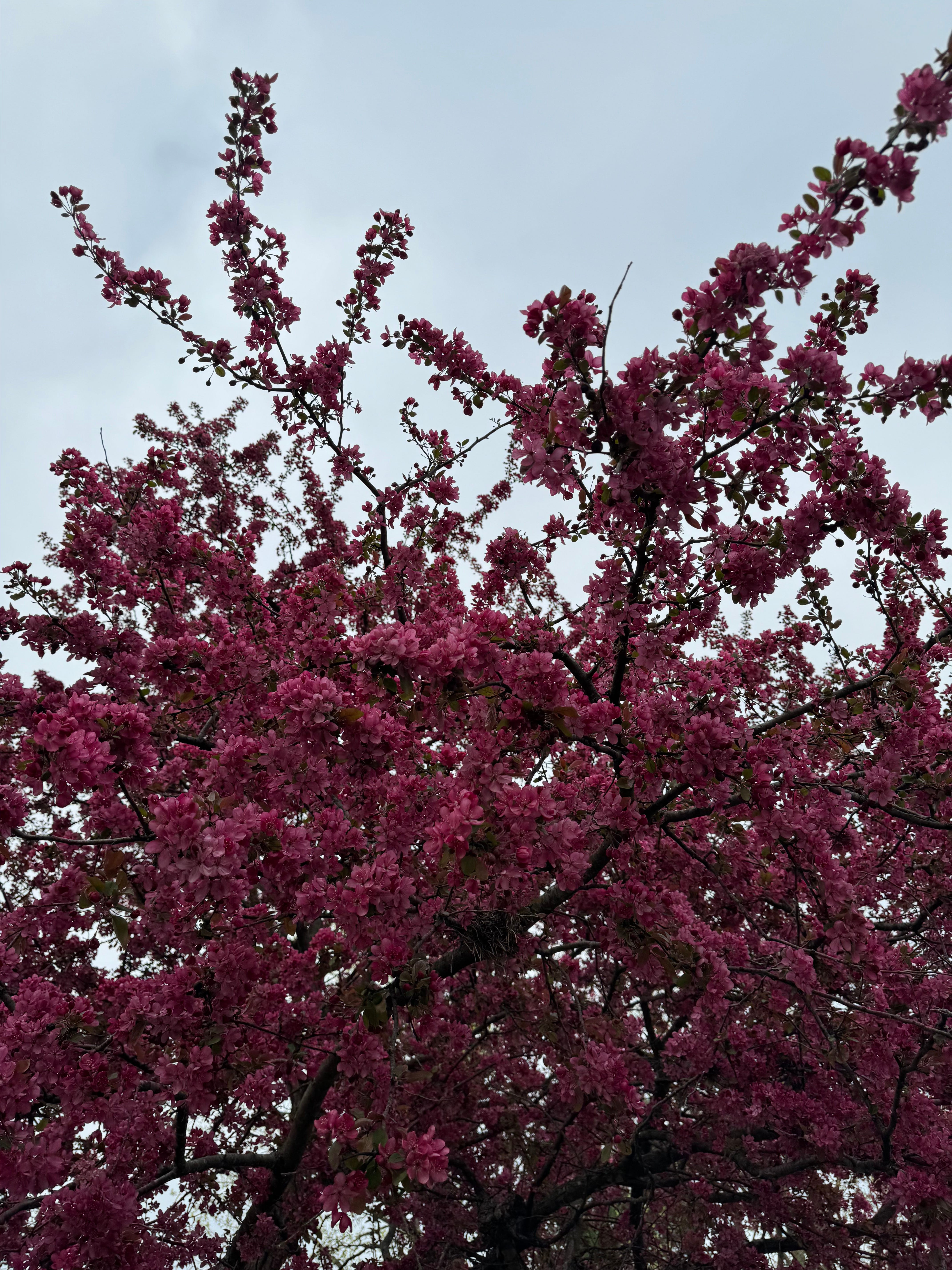
The birds are lively — this is a great time of year for bird watching (or listening) as they have recently returned home from migration and are just emerging from winter survival mode. I hear them greeting one another. Attracting or locating a mate. Marking territory.
I hear a single-engine plane overhead and know that my husband was right when he said “today is a perfect day for flying” before heading off to work.
I wasn’t supposed to be here this morning. My goldendoodle Karis and I drive back to the small town we moved from last year every 5 weeks for her trip to the pet spaw.1 My normal routine is to go to the local coffee shop and read or write while I wait for her to have her bath and haircut. I was annoyed to learn last night that the coffee shop would be closed this morning for staff training.
But perhaps, I am discovering, this is better.
If this diversion had happened for our last appointment, it would have been too cold and rainy to spend the hour at the park. The timing of this more pleasant plan b is a grace.
Most of the time, I view a disruption to my plans and routines as an obstruction.2 But sometimes, it nudges me towards a more nourishing option that I would have otherwise overlooked.
Here, outside, with the sparrows and robins providing the soundtrack, with an occasional dog barking or car passing by to add texture and let me know that this is not artificially created background music.
This is not brought to me by an algorithm, but by natural rhythms. The rhythms of the seasons — here the awakening of the spring. The rhythms of people — at 9:30 am, most of the inhabitants of the house that edge the park are already at school or at work, so it is quiet. The rhythms of the elements — as the wind chimes singing their melodies let me know that the breeze has shifted. The silence that followed corresponds to the sudden stillness of the air. The increasing warmth on my skin from the sun is no longer being countered by the spring breeze.
I’m reminded of another rhythm. Just around the corner is the home where a friend lived. Eight years ago right now she was in hospice care with too few days remaining.
The breeze picks up again and keeps me from descending very far into memory and another wave of grief. The interruption is reinforced by the patter of a preschooler’s feet as he eagerly crosses to the playground. His mom hurries behind him, giving me an apologetic look as she notices my attention being drawn from these pages to the child. I smile back, no apology necessary.
I hear them playing a variation of peek-a-boo with him shouting from the top of the slide, her responding with laughter from below. Here is another rhythm that has been playing out for all of human history — a child making sure a parent is close by, watching, paying attention, looking for them. A parent responding with reassuring presence.
They move from the slide to the swing. The back and forth keeping time for the mother’s prosody, laughter and encouragement as she sends him away with a push and squeals of delight from both as she welcomes his return.
This is a grace — the gift of attention, of attunement, of sending out to explore, and welcoming back.
They wander mostly out of sight and out of earshot, but I am offered glimpses of their continuing reciprocity. He explores, trying out the playground equipment, climbing higher, running faster. She follows with interest, looking at what he looks at, only interfering with his process to maintain safety. Back and forth go the proclamations of delight and laughter.
With the background music of sparrows and robins, I’m witnessing a parent and child building a relationship. Not just any relationship, but a relationship that helps the child learn to trust himself enough to take risks. A relationship that helps the child learn to ask for and receive help, knowing that it will be available. These are the foundations of courage, the foundations for being brave.3
I think about my life, some projects in the works, some ideas that have percolating. There are other considerations, but what I need most to act on them is some courage and bravery.
I look over at the parent and child leaving the park, and I feel a twinge of sadness for the times I have not felt supported in the way I witnessed this morning.
But also, I am reminded of an implicit knowing that I can take risks. That I can ask for and receive help, knowing that it will be available. That I, too, have the foundations of courage, the foundations for being brave.
I whisper a prayer of thanks and imagine the delight of God as my annoyance at the temporary closure of a coffee shop has been replaced by gratitude.
Another grace.
Her name is from the Greek word for grace.
My husband will be happy to provide examples if you think I’m overstating.
This narrative describes attachment theory, originally developed by John Bowlby and operationalized and expanded by Mary Ainsworth and others. The elements named here are drawn on the Circle of Security. I recommend the book Raising a Secure Child: How Circle of Security Parenting can help you nurture your child’s attachment, emotional resilience, and freedom to explore by Hoffman, Cooper, and Powell as a practical primer to attachment.
It was a perfect morning for flying, winds were light and the skies were clear. Sounds like it was also a perfect morning to sit in a park and reflect on the cycles of life. ❤️